Honda Rebel 500 Common Problems – Real Issues, Owner Complaints & What’s Actually Normal
Fast Answer: Does the Honda Rebel 500 Have Serious Problems?
The Honda Rebel 500 does not have widespread, serious mechanical failures. Its reputation for Honda reliability is well-earned. Most reported “problems” are not defects but fall into three categories: normal motorcycle behavior misunderstood by new riders, a mismatch between owner expectations and the bike’s design purpose, or issues arising from deferred maintenance. Major engine or transmission failures are exceptionally rare, making long-term ownership generally stress-free and predictable.
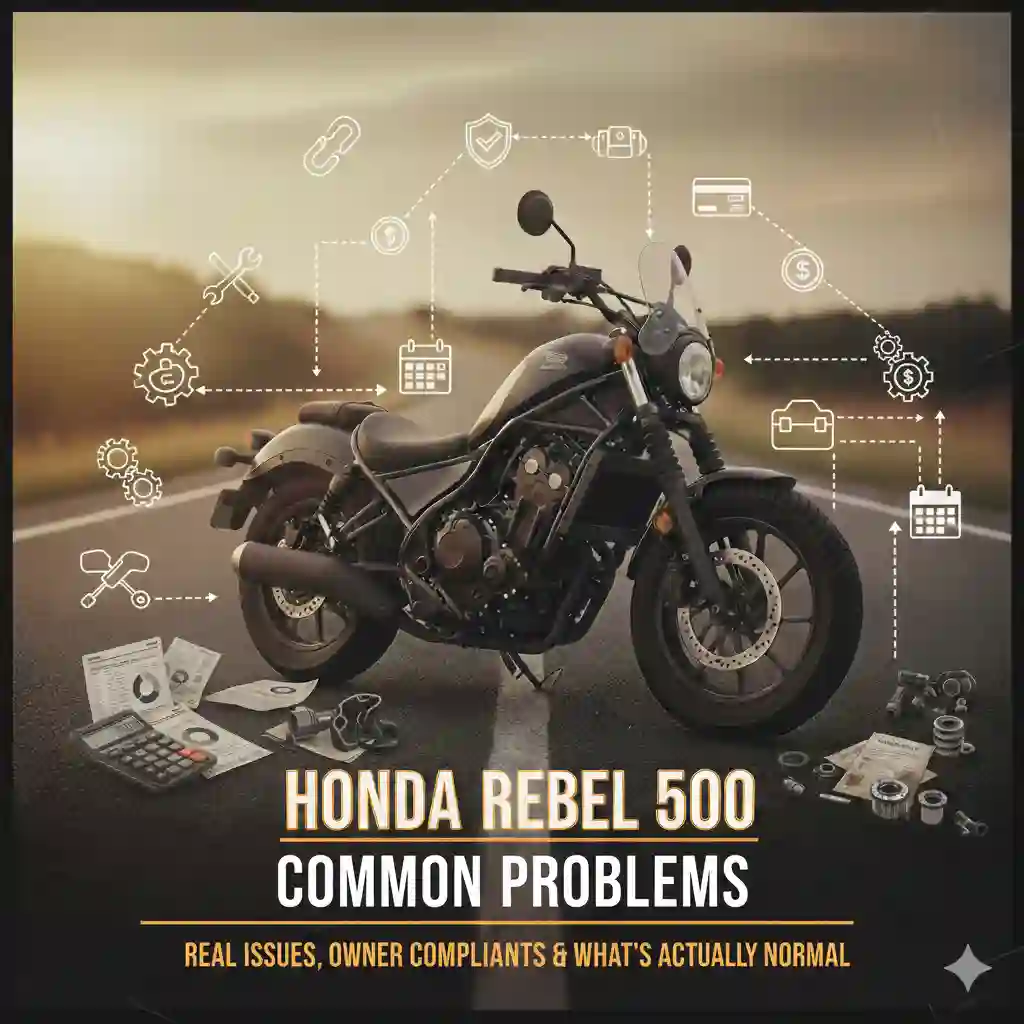
Introduction: Why “Problems” Need Context
Spend any time on motorcycle forums or YouTube, and you might come away thinking every bike is a ticking time bomb. The Honda Rebel 500 is no exception, with threads and videos listing various “problems.” However, it is crucial to approach these complaints with context. New riders, who make up a large portion of Rebel 500 owners, often misinterpret normal operational characteristics as faults.
There is a significant difference between a true defect (a part failing prematurely), a design limitation (a conscious engineering trade-off to meet a price point), and simple wear and tear. Online complaints are often amplified because satisfied owners rarely post about their bikes running perfectly. This guide offers a transparent, experience-driven breakdown of the most common Honda Rebel 500 owner complaints, separating real issues from myths and misunderstandings.
Most Common Honda Rebel 500 Owner Complaints (Explained)
Many of the top complaints about the Rebel 500 are not about parts failing, but about the bike’s inherent design and purpose.
- “Feels underpowered on highways”: The 471cc parallel-twin engine is designed for city commuting and backroad enjoyment. While it is capable of highway speeds, it is not a powerhouse. At 70-80 mph, the engine is working hard, and quick overtakes require planning. This isn’t a problem, but an expectation mismatch for riders wanting effortless high-speed touring performance.
- “Seat becomes uncomfortable on long rides”: The stock seat is a common point of contention. It is relatively thin and can create pressure points after an hour or two of continuous riding. This is a design trade-off to achieve the bike’s low seat height and sleek styling. It is a real comfort issue for many, but one that is easily solved with aftermarket seats.
- “Suspension feels stiff or basic”: The Rebel 500 uses a non-adjustable front fork and preload-adjustable rear shocks. This budget-friendly setup is adequate for smooth roads but can feel harsh over bumps and potholes. It’s a design limitation, not a defect.
- “Wind fatigue at higher speeds”: As a naked cruiser with an upright riding position, the Rebel 500 offers no wind protection. At highway speeds, the rider’s chest acts like a sail, leading to fatigue. This is a characteristic of this style of motorcycle, not a flaw in the Rebel itself.
Engine & Performance-Related Issues (Reality Check)
The heart of the Rebel 500 is its 471cc parallel-twin engine, a powerplant known for its reliability across several Honda models. Issues here are almost always related to perception, not mechanical failure.
- Power Delivery: The engine is tuned for smooth, predictable, and linear power delivery, making it ideal for beginners. Riders looking for an aggressive, thrilling “hit” of power will find it tame. The lack of a dramatic powerband is a deliberate feature for usability.
- Engine Heat: In heavy, stop-and-go traffic on a hot day, you will feel heat from the liquid-cooled engine on your legs. This is normal for almost any motorcycle. Abnormal heat would be accompanied by a dashboard warning light.
- Vibration Levels: You will feel some vibration through the handlebars and footpegs, especially at higher RPMs. It’s a parallel-twin engine, not an electric motor. The vibration is generally well-managed and not considered excessive for its class.
Transmission & Clutch Concerns
The Rebel 500’s six-speed transmission is generally praised for its smooth operation. Concerns are usually rooted in rider technique.
- Clutch Feel: The clutch pull is light and forgiving, designed for ease of use. Some experienced riders may find it lacks a distinct “friction zone,” but this is beneficial for beginners learning clutch control.
- Gearbox Smoothness: The gearbox is typically smooth and clicks into gear positively. If shifting feels clunky, the cause is often an improperly maintained and lubricated chain or the rider not being firm enough with the shifter.
- False Neutrals: Finding a “false neutral” (a space between gears) is possible on any motorcycle but is not a common Honda Rebel 500 issue. It usually happens due to a lazy or incomplete shift action by the rider.
Suspension & Ride Quality Limitations
This is perhaps the most legitimate area of complaint, stemming from the bike’s budget-conscious design. The suspension is functional but basic.
- Rough Roads: The suspension struggles to absorb sharp bumps, which can result in a jarring ride on poorly maintained roads.
- Two-Up Riding: Adding a passenger can easily overwhelm the rear shocks, leading to a bouncy ride and potential bottoming out. Adjusting the rear preload can help but won’t solve the core issue.
- Aggressive Riding: When pushed hard in corners, the suspension can feel vague and unsettled. It is not designed for sportbike-level performance.
This is a clear trade-off for affordability. For many riders, it is perfectly adequate. For those who want more performance, aftermarket suspension upgrades are available.
Brake System & ABS Complaints
The Rebel 500 is equipped with single disc brakes front and rear, with an optional ABS braking system. The brakes are effective, but complaints sometimes arise from feel.
- Brake Feel: The front brake is not exceptionally sharp or “bitey.” It provides progressive, predictable stopping power, which is safer for new riders. Experienced riders may desire a more aggressive initial bite.
- ABS Behavior: The ABS is a safety feature that prevents wheel lock-up during hard braking. When it activates, riders will feel a pulsing sensation in the lever or pedal. This is normal and means the system is working.
- Pad Wear: Brake pad life is a wear item and depends entirely on riding style. There are no known issues of premature pad wear.
Comfort & Ergonomic Issues
Ergonomics are subjective and depend heavily on rider size.
- Seat Comfort: As mentioned, this is the most frequent complaint. It’s a real issue for many, leading them to invest in aftermarket solutions from brands like Mustang or Saddlemen.
- Handlebar Reach: The stock handlebar position is comfortable for most but may feel like a long reach for shorter riders or too cramped for very tall riders.
- Footpeg Position: The mid-controls place the rider’s feet in a neutral position. Riders accustomed to forward controls on other cruisers may find it cramped.
Honda designed the Rebel 500 to fit a wide range of riders, but no single design can be perfect for everyone. Customization is often part of the cruiser ownership experience.
Electrical & Minor Issues (Rare but Mentioned)
True electrical problems are rare. When they do pop up, they are usually simple fixes.
- Battery Lifespan: Like any motorcycle, the battery will die if the bike is stored for long periods without being on a tender. This is user error, not a defect.
- Dashboard Warnings: An unexpected warning light is most often related to a sensor issue or, in some cases, the ABS system needing a reset, but these are not widespread Honda Rebel 500 known issues.
- Storage-Related Issues: Most electrical gremlins on bikes that have been stored come from corroded terminals or rodent damage to wiring.
Problems Caused by Poor Maintenance (Not the Bike)
This is the most critical section. A significant portion of problems blamed on the bike are a direct result of neglected maintenance.
- Poor Chain Care: A dry, dirty, or improperly tensioned chain drive will cause jerky throttle response, clunky shifting, and excess noise. This is the most commonly neglected maintenance item.
- Skipped Oil Changes: The engine holds a small amount of oil. Ignoring service intervals will lead to premature engine wear.
- Incorrect Tire Pressure: Underinflated tires will make the bike feel heavy, handle poorly, and wear out quickly.
These are not Honda Rebel 500 reliability problems; they are owner responsibility issues. Following the maintenance schedule in your owner’s manual will prevent 90% of these perceived problems.
Long-Term Reliability: What Happens After High Mileage?
The long-term reliability of the Rebel 500 is excellent. The 471cc engine is proven to last for tens of thousands of miles with regular maintenance.
- Engine Longevity: It is not uncommon to see these engines surpass 50,000 or even 100,000 miles without major internal work.
- Wear Items: Over time, you will replace the chain and sprockets, brake pads, tires, and battery. This is normal for any motorcycle.
- What Rarely Fails: Major failures of the engine, transmission, or frame are almost unheard of.
The Rebel 500 is a machine you can buy with confidence for long-term ownership.
Is the Honda Rebel 500 Reliable Compared to Rivals?
Compared to its main competitors, the Rebel 500 holds its own and often comes out on top in terms of reliability.
- vs. Kawasaki Vulcan S: The Vulcan S offers more power and features, but some owners report more minor electrical quirks. Both are very reliable, but Honda’s reputation for build quality is slightly stronger.
- vs. Yamaha Bolt: The Bolt offers a classic air-cooled V-twin experience. It’s also very reliable, but the air-cooled design may run hotter in traffic, and it lacks the modern features of the Rebel.
Overall, the Rebel 500 is considered a benchmark for reliability in the entry-level cruiser class.
Should Common Problems Stop You from Buying One?
For the vast majority of riders, the answer is no.
- Who Shouldn’t Worry: Beginners, commuters, and riders looking for a dependable, easy-to-ride, and stylish cruiser will be extremely happy. The “problems” are minor and easily addressed.
- Who May Feel Limited: Aggressive sport riders, long-distance tourers, or riders who primarily do high-speed highway travel may find the suspension and power limitations frustrating.
Ultimately, your satisfaction will be determined by aligning your expectations with the bike’s intended purpose.
How to Avoid Most Rebel 500 Problems
- Set Realistic Expectations: Understand that you are buying an affordable, reliable cruiser, not a race bike or a luxury tourer.
- Perform a Proper Break-In: Follow the manufacturer’s recommendations for the first 500 miles to ensure long-term engine health.
- Embrace Maintenance Discipline: Clean and lube your chain regularly, check your tire pressure, and perform oil changes on time.
- Adapt Your Riding Style: Learn to shift smoothly and understand the bike’s powerband. Don’t expect it to perform outside its design parameters.
Final Verdict – Motorcycle Specialist Opinion
The list of Honda Rebel 500 common problems is short and predictable. The bike is not burdened by any significant, widespread mechanical or electrical defects. The complaints that surface are almost always related to its budget-friendly components (seat, suspension) or a misunderstanding of its role as an approachable, user-friendly machine.
It is not a high-risk motorcycle. For a beginner motorcyclist who prioritizes reliability, ease of use, and low ownership costs, the Honda Rebel 500 remains one of the best and safest choices on the market.
FAQs
What are the most common Honda Rebel 500 problems?
The most common complaints are an uncomfortable stock seat on long rides and a basic suspension that can feel harsh on rough roads. These are design trade-offs, not mechanical failures.
Is Honda Rebel 500 reliable long term?
Yes, it is exceptionally reliable long term. With regular maintenance, the 471cc engine is known to last for many tens of thousands of miles without major issues.
Does Rebel 500 have engine issues?
No, the Rebel 500 does not have any known widespread engine issues. The 471cc parallel-twin is one of Honda’s most proven and reliable powerplants.
Are Rebel 500 problems expensive to fix?
Since most “problems” are related to comfort or basic components, they are not expensive to fix. Aftermarket seats and suspension are optional upgrades, and regular maintenance costs are low.
Should beginners worry about Rebel 500 issues?
No, beginners should not worry. The bike is specifically designed to be forgiving, reliable, and easy to manage, making it an ideal first motorcycle.
What is the biggest complaint about the Honda Rebel 500?
The single biggest complaint is the stock seat’s lack of comfort on rides longer than an hour.
Does the Rebel 500 have a transmission problem?
No, it does not have a known transmission problem. The six-speed transmission is smooth and reliable. Reports of clunky shifting are almost always due to poor chain maintenance or rider error.
How many miles will a Honda Rebel 500 last?
With proper care, a Rebel 500 can easily last over 75,000 miles. Many owners have reported surpassing 100,000 miles with only routine maintenance.
Is the Rebel 500 good for highway riding?
It is capable of highway speeds but is not ideal for long-distance highway touring. The engine will be at high RPMs, and the lack of wind protection causes rider fatigue.
Why does my Rebel 500 feel so bumpy?
This is due to the bike’s budget-level suspension. It is functional for smooth roads but lacks the sophistication to absorb sharp bumps effectively, leading to a firm ride.
Is the ABS on the Rebel 500 good?
Yes, the ABS is a reliable and effective safety feature that works well to prevent wheel lock-up in emergency braking situations.
Can you make a Rebel 500 more comfortable?
Yes. The most common comfort upgrades are an aftermarket seat, handlebar risers to adjust reach, and upgraded rear shocks to improve ride quality.


